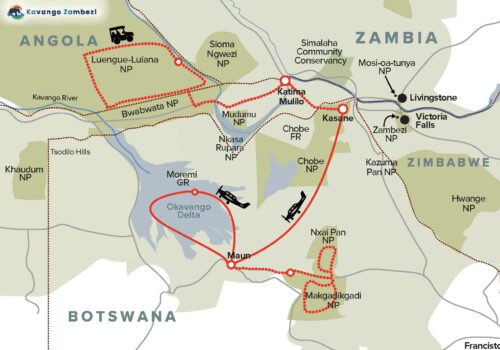
Angola
  Botswana
  Namibia
  Zambia
  Zimbabwe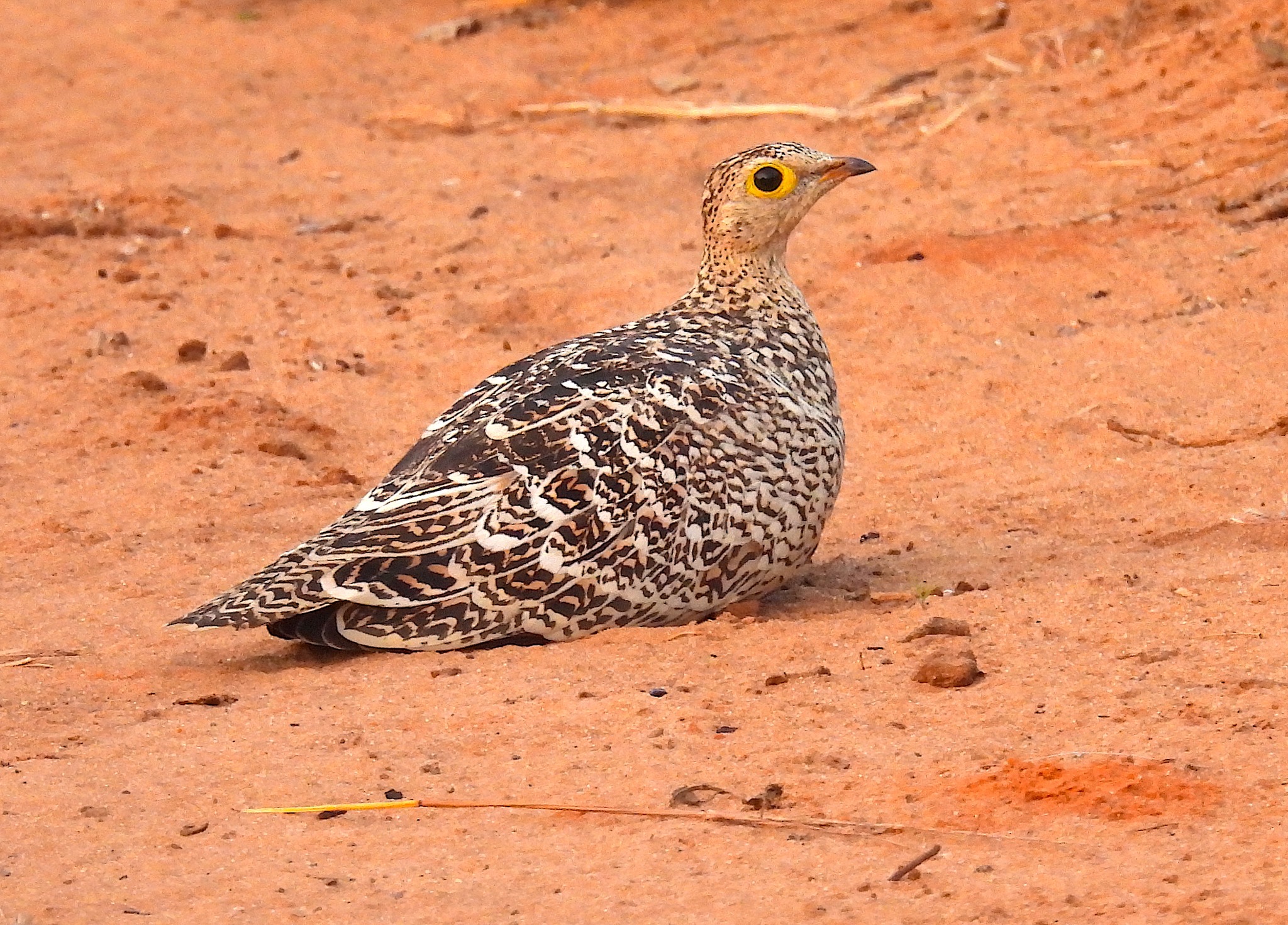
Botswana: Maun to Nata
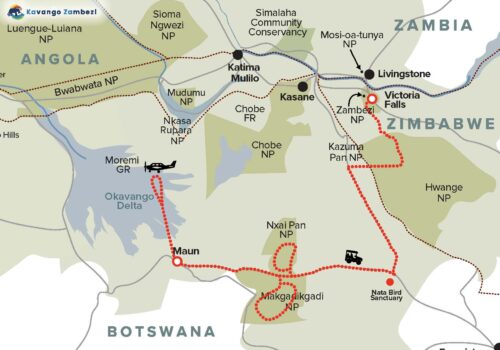
The small town of Maun is the southern gateway to the Okavango Delta, hence something of a safari hub. Most visitors who pass through head north in search of the prolific wildlife of the delta. For birders, however, an equally rewarding route also lies due east of Maun along the long, straight road to Nata. This 300km highway bisects the great salt pans of Nxai and Makgadikgadi, home to numerous arid-country birds plus huge seasonal gatherings of flamingos. It lies at the very southern edge of the Kavango–Zambezi region, offering a taste of the Kalahari and a birding experience found nowhere else in the TFCA.
In Maun itself, the Thamalakane River flows through town, providing a seasonal conduit between the waters of the delta and the Boteti River to the south. This is an excellent location to seek out some classic Okavango birdlife. Elusive African Pygmy Goose and Lesser Jacana forage among the water lilies, while Long-toed Lapwing and Saddle-billed Stork work the water’s edges, and Coppery-tailed Coucal and Rufous-bellied Heron skulk in the reeds. Riverine thickets also harbour local specials such as Hartlaub’s Babbler and Red Firefinch.
East from Maun, Makgadikgadi Pans National Park lies to the south of the Nata Road. Here, the open grasslands around the blinding white salt pans are home to numerous Lark species, including Clapper, Fawn-coloured and Red-capped, while all four of southern Africa’s Sandgrouse species – Namaqua, Burchell’s, Double-banded and Yellow-throated – occur, often seen winging overhead at dusk towards a distant waterhole. Double-banded Courser and White-quilled Bustard are among other typical Kalahari species found here, while a scan of the horizon will often reveal a Secretary Bird or Kori Bustard, surpassed in stature only by the numerous Ostriches that frequent this area.
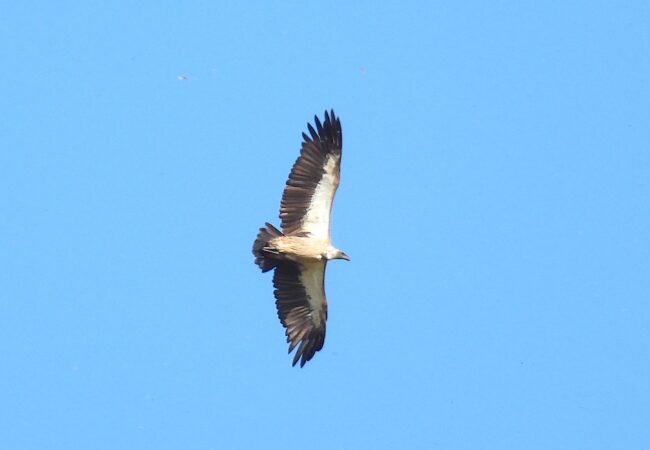
Nxai Pan National Park lies just to the north of the Maun–Nata Road and offers similar arid thornveld habitat, with a similar selection of birds. The thickets around lodges and campsites harbour numerous smaller species typical of the Kalahari, including Southern Pied Babbler, Shaft-tailed Whydah and the dazzling Violet-eared Waxbill. Stands of palms offer vantage point to raptors such as Greater Kestrel and Red-necked Falcon, while isolated thorn trees support the massive, untidy nests of Vultures, including White-backed and Lappet-faced.
Raptors are at their most impressive during the December–March rains, when migratory Western Red-footed Falcons, Steppe Buzzards and Yellow-billed Kites arrive in their hundreds to feast on emerging termites, and Montagu’s Harriers drift elegantly over the grasslands. Other visitors to arrive at this time include flocks of White Storks, while Southern Carmine Bee-eaters follow game herds to snap up insects flushed in their wake.
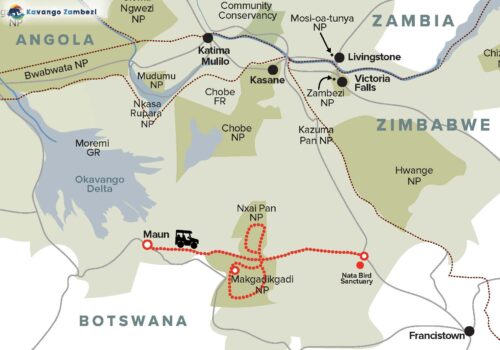
Makgadikgadi & Nxai Pans, Boteti River & Nata Bird Sanctuary – 5 days or more
Birding in BOTSWANA AND ZIMBABWE – 14 days or more