Botswana: Kasane and Chobe National Park
Botswana: Kasane and Chobe National Park
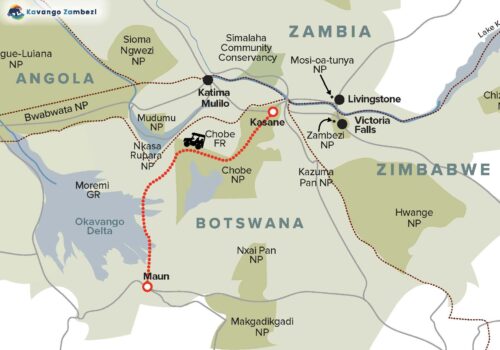
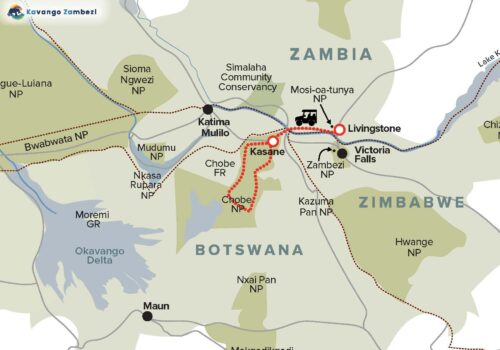
Chobe National Park is one of Africa’s most celebrated safari destinations, best known for the huge herds of elephant and other large game that mass along the riverfront during the dry season. Birders here will also find some of the richest rewards anywhere in the Kavango-Zambezi TFCA region – notably during the rainy season, from December to April, when the population of resident species is swelled by a huge influx of migrants. The park covers some 11,700 sq km, with habitats ranging from floodplains and riparian woodland along the Chobe riverfront to the dense mopane woodland of the park’s interior, the swamps of the Linyanti region to the west, and the plains of Savuti to the south.
Kasane, in Botswana’s northeast corner, lies just outside the entrance to Chobe. A wealth of birdlife is found around the town and nearby lodges, with songsters such as Collared Palm Thrush, Eastern Bearded Robinand Sulphur-breasted Bush-shrike calling from the thickets, while waterbirds such as White-crowned Plover and African Openbill forage along the riverbanks. During the rainy season, listen out for the melodious voice of the Thrush Nightingale, a migrant from eastern Europe, while the harsher calls of the Broad-billed Roller, a visitor from equatorial Africa, draw attention to its aerial antics. A flash of scarlet may also reveal Schalow’s Turaco in the larger fruiting trees. Keen birders with time to spare in Kasane might also try the Water Treatment Works, just east of town, where waders such as Ruff, Kittlitz’s Plover and Wood Sandpiper forage among an assortment of ducks, herons, egrets and cormorants. Beware of elephants, which may appear anywhere.
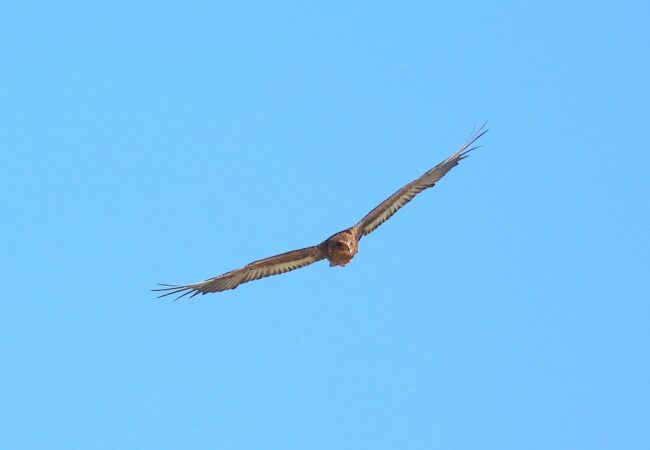
The northern section of Chobe National Park is one of the richest birding areas in southern Africa, with over 450 bird species recorded. Indeed, a team of four birders once recorded 290 species here in just 24 hours – a regional record. From the park entrance near Kasane, the waterfront stretches west to Ngoma, where a road bridge allows crossing into Namibia. All along this stretch, the river and floodplain teem with waterbirds, from diminutive Malachite Kingfishers to stately Goliath Herons. During the rainy season, African Skimmerssweep over the water on elastic wings, while flocks of Collared and Black-winged Pratincoles hawk insects overhead. The best way to appreciate this avian profusion is on a boat cruise: the Puku Flats area guarantees an impressive selection of the more common waterbirds, while diversions down quieter channels may reveal more elusive species, such as African Finfoot, Half-collared Kingfisher and White-backed Night-heron. Look out for Rock Pratincoles in the rapids area near the Chobe’s confluence with the Zambezi.
Following the river along the park’s numerous riverside loop roads may reveal the likes of Trumpeter Hornbill, Western Banded Snake-eagle and even the much-coveted Pel’s Fishing Owl in larger riverine trees, while the dense waterside tangle harbours such local specials as Red-throated Twinspot, Swamp Boubou, Brown Firefinch and Purple-banded Sunbird. Where the trees open out onto the broader floodplain, Slaty Egret, Rufous-bellied heron, Long-toed Plover and Pink-throated Longclaw may be found among more common species.
Further west still, the Linyanti region is home to some exclusive lodges, most easily accessed by air. Here, the Linyanti River – a westward extension of the Chobe – spreads out into a mosaic of wetlands and woodlands. Dense papyrus beds line the waterways, home to such swamp-loving species as Greater Swamp Warbler, Luapula Cisticola and Allen’s Gallinule. Small pools hold shy African Pygmy Geese, while African Marsh Harriers quarter the reedbeds on angled wings in search of prey below. Inland, the mopane woodland teems with hornbills, francolins and other woodland birds, while diligent birding may turn up such sought-after species as Arnot’s Chat and Dickinson’s Kestrel. Large raptors are conspicuous in this area – indeed, Chobe National Park has the highest densities of raptors in southern Africa – with Lappet-faced Vulture among several vulture species often gathering at predator kills, and a glance at the sky often rewarded by a soaring Bateleur or Martial Eagle.
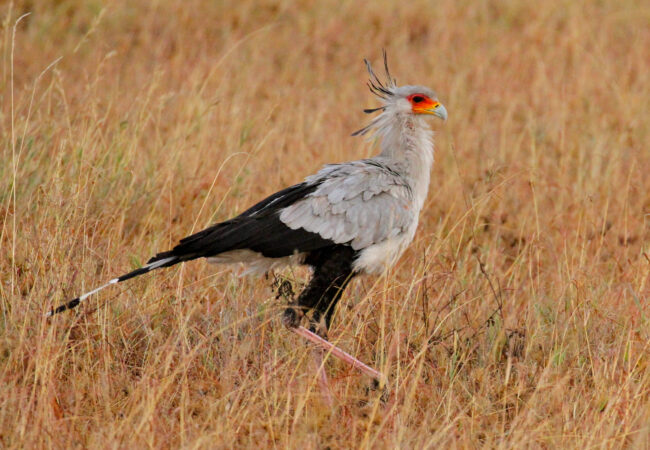
In the Southwest of Chobe National Park lies Savuti Marsh, a unique sector of the park separated from Chobe waterfront by vast tracts of mopane woodland that carpet the interior. Here, there are marshes fed by a seasonal overspill from the nearby Okavango Delta, plus expansive grasslands, both of which teem with birdlife. Kori Bustard, Denham’s Bustard, Secretary Bird, and both Grey Crowned and Wattled Cranestrike conspicuous profiles in the open terrain, where the rainy season brings migratory Harriers – Montagu’sand Pallid – drifting over the plains in search of prey in the long grass. Southern Carmine Bee-eaters are often seen around Kori Bustards, sometimes perching on the larger birds’ backs to snap up prey disturbed at their feet.
Chobe National Park is safari central, so visitors are spoilt for choice when it comes to activities and accommodation. Upmarket lodges here offer among the most exclusive and finest game-viewing in Africa. However, there are also budget options, especially in the Kasane area, and the good news for birders is that the birding is spectacular wherever you go. It’s worth bearing in mind, also, that the December–April low season – when the rains make game-viewing more challenging – is also the best time of year for birds.