Angola
  Botswana
  Namibia
  Zambia
  Zimbabwe
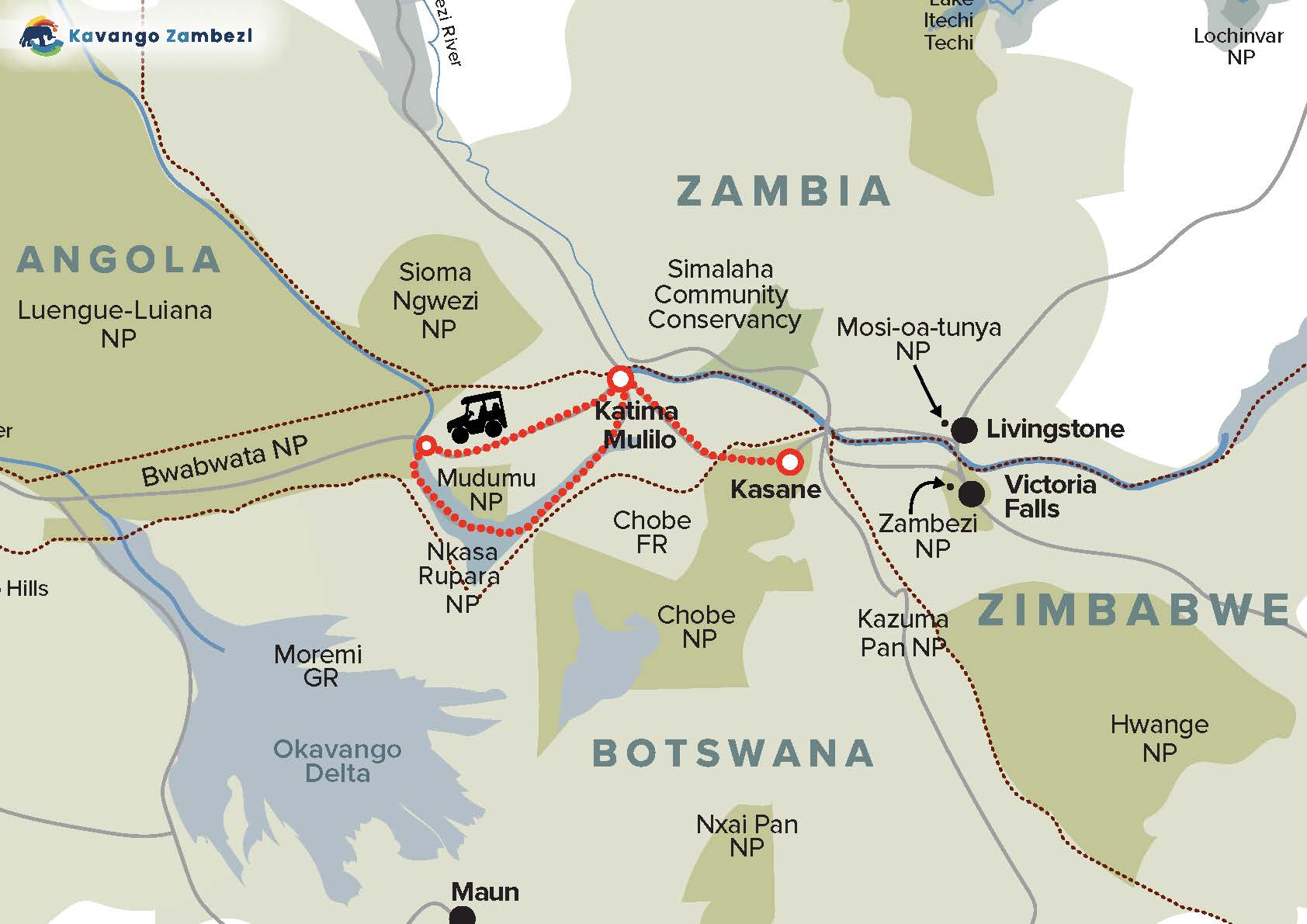
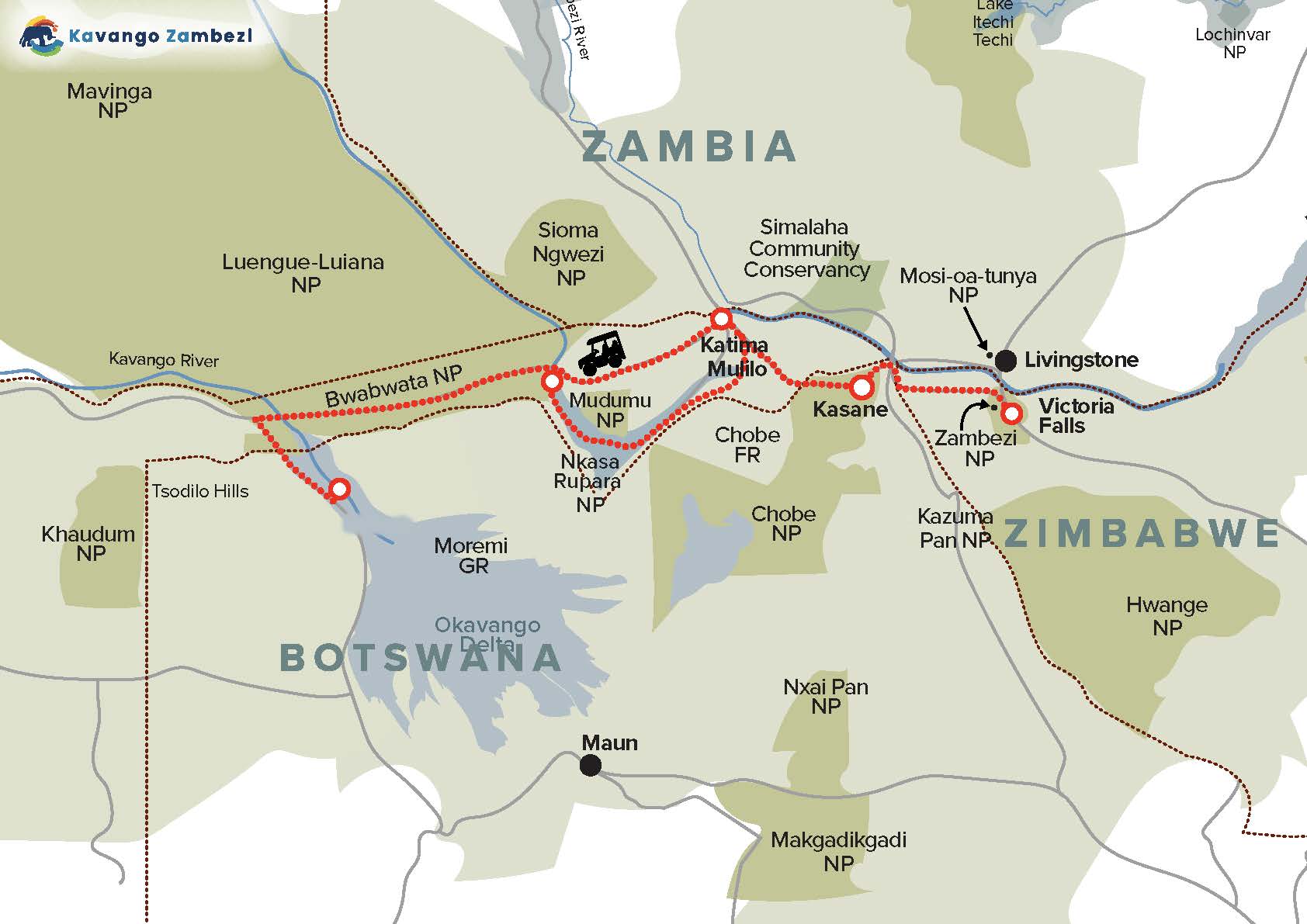
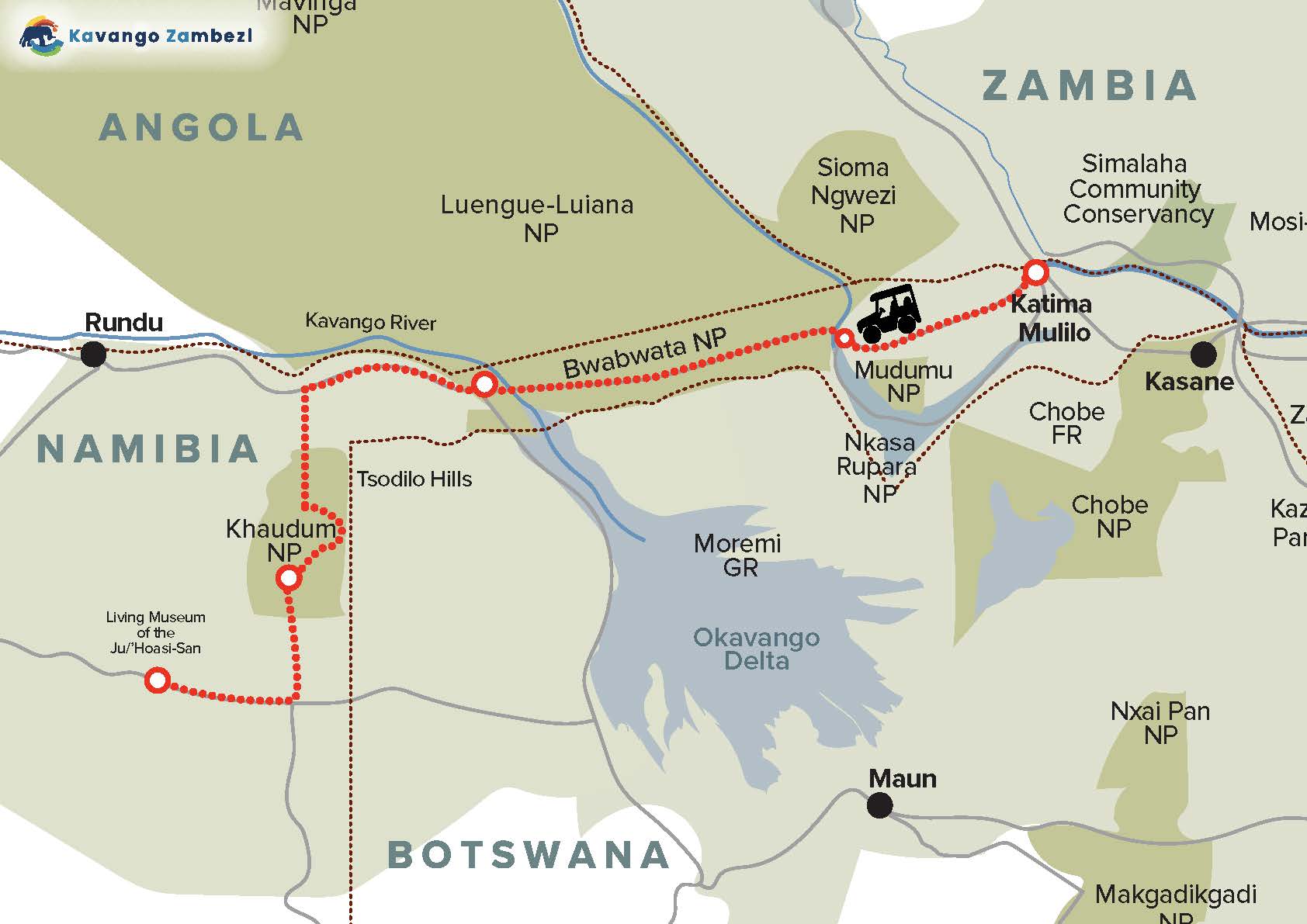
Fly into Katima Mulilo from Windhoek or into Kasane and then road transfer to Katima.
Arrive mid-afternoon at your camp or lodge, nestled on the banks of the Zambezi or a lagoon near Katima Mulilo. This area is home to Southern Africa’s largest Carmine Bee-eater breeding colony, one of Africa’s most dazzling avian spectacles.
From late August to mid-November, up to 4,000 Southern Carmine Bee-eaters gather here to breed, painting the riverbanks in brilliant scarlet and turquoise hues. Watch these energetic birds as they dart, dive, and feed — a must-see highlight for birders and photographers alike.
In the late afternoon, enjoy a guided village walk through a nearby community, offering an authentic cultural experience. Keep an eye out for woodland and wetland birds such as the African paradise flycatcher, blue waxbill, and golden weaver.
Where to stay: Caprivi Mutoya Lodge, Caprivi River Lodge, Caprivi Houseboat Safari Lodge
After an early breakfast, depart for Divundu, traveling through woodland savannah and floodplain habitats that host a variety of raptors and passerines — look for Bateleur eagles, brown snake-eagles, and southern ground-hornbills en route.
Arrive at your accommodation on the Kavango River near the scenic Popa Falls. Area perfect for spotting African skimmers, African fish eagles, and white-backed night herons.
In the late afternoon, take a guided boat cruise downstream. Expect to see hippos, crocodiles, and an impressive diversity of riverine and wetland birds — including kingfishers, herons, cormorants, and African jacanas. Enjoy sundowners at Popa Falls, watching sunset silhouettes of bee-eaters, swallows, and egrets along the river.
Where to stay: Shamvura Camp, Camp Nkwazi, Mahangu Safari Lodge, Ndhovu Safari Lodge, Nunda River Lodge, Ngepi Camp, Namibia Wildlife Resorts – Popa Falls
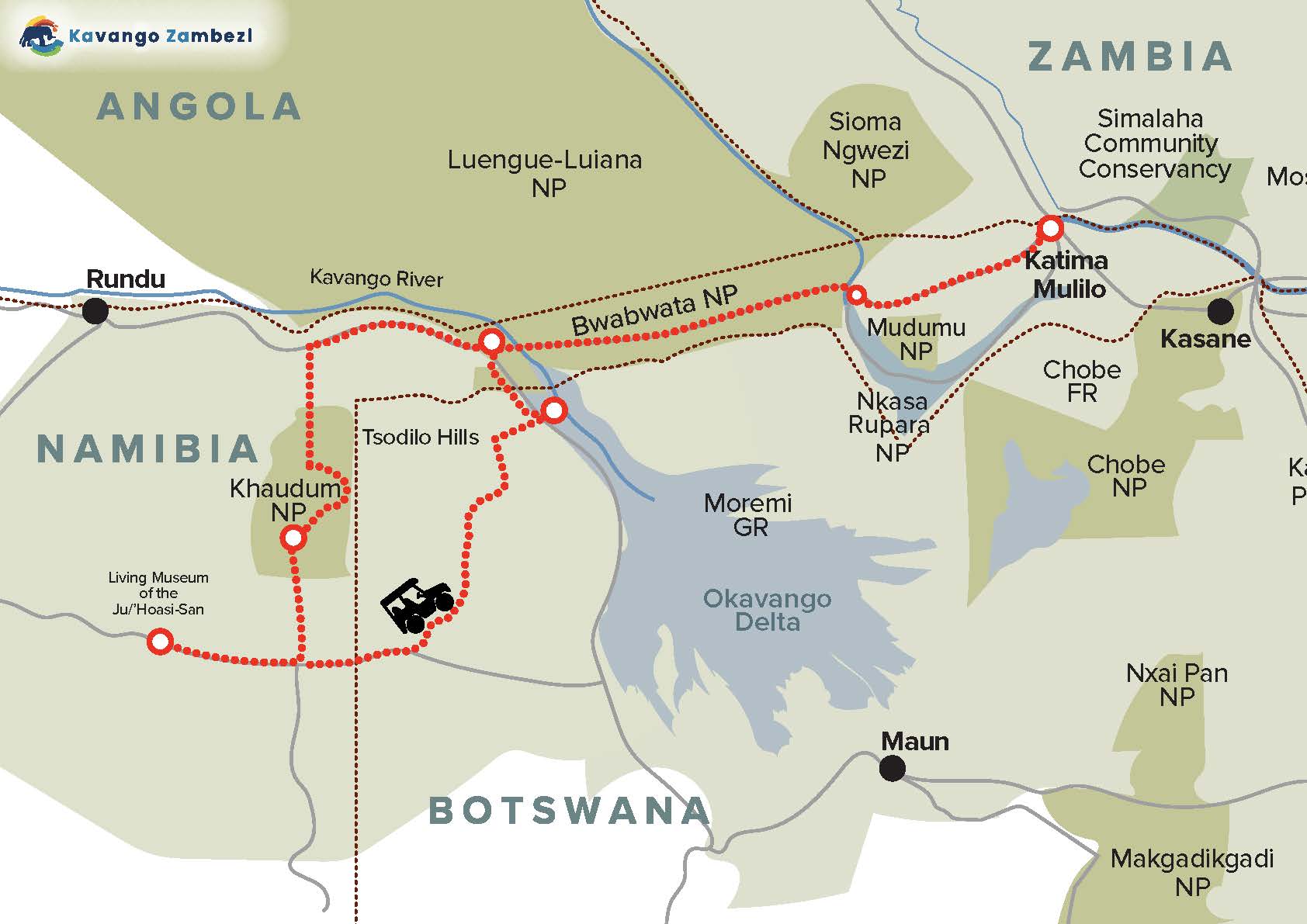
Today’s journey takes you into the remote Khaudum National Park, one of Namibia’s wildest birding frontiers. The park’s mixed acacia woodland and open pans attract a rich mix of dryland and savannah species.
Khaudum offers prime sightings of Meyer’s parrot, Crested francolin, Grey-backed camaroptera, Ground hornbills, and even rare raptors like Bateleurs and Martial eagles. During the dry season, large herds of elephants and antelopes visit waterholes, often accompanied by red-billed oxpeckers and yellow-billed kites.
The vastness and solitude of Khaudum make it ideal for serious birders seeking Namibia’s less-explored ecosystems.
Optional: Visit the Living Museum of the Ju/’Hoansi-San, where you’ll learn about traditional bushcraft and tracking — skills invaluable for understanding how local people read the same landscapes birders explore.
Where to stay: Sikereti Camp
Cross into Botswana and travel to the Tsodilo Hills, a UNESCO World Heritage Site revered by the San people and known for its 4,000 ancient rock paintings. The hills’ unique microclimate and elevation attract interesting species, including Hartlaub’s babbler, Rock kestrel, and Mocking cliff-chat.
Continue the Panhandle, a birding jewel in the permanent waters of the Okavango Delta. This area offers superb access to Okavango waterbirds — from Slaty egrets and African pygmy-geese to Malachite kingfishers and White-backed night-herons.
Enjoy an afternoon boat-based birding excursion among papyrus channels and reedbeds, home to Swamp boubous, Coppery-tailed coucals, and Little bee-eaters.
Where to stay: Askiesbos, Samochima Bushcamp or Xaro Lodge
Depart Bottswana and cross back into Namibia at Mohembo Border Post, continuing on to Bwabwata National Park, a vital link in the Kavango–Zambezi Trans Frontier Conservation Area.
Bwabwata’s mosaic of riverine woodland, floodplains, and wetlands makes it one of the richest birding areas in Namibia. Over 400 species have been recorded here, including Pel’s fishing owl, African skimmer, African openbill, and White-fronted bee-eater.
Stay at Kazile Island Lodge (or similar), beautifully positioned within the park on the Kwando River. Afternoon birding from the lodge deck or during a guided river cruise often yields sightings of Carmine bee-eaters, racket-tailed rollers, and woodland kingfishers.
Where to stay: Mukolo Camp, Nambwa Tented Lodge, Kazile Island, Nambwa Campsite
After a final morning bird walk through the floodplain forests — listening for African broadbills, grey-headed parrots, and African golden orioles — return to Katima Mulilo.
Depart with unforgettable memories of Southern Africa’s most diverse and rewarding birding landscapes.