Angola
  Botswana
  Namibia
  Zambia
  Zimbabwe
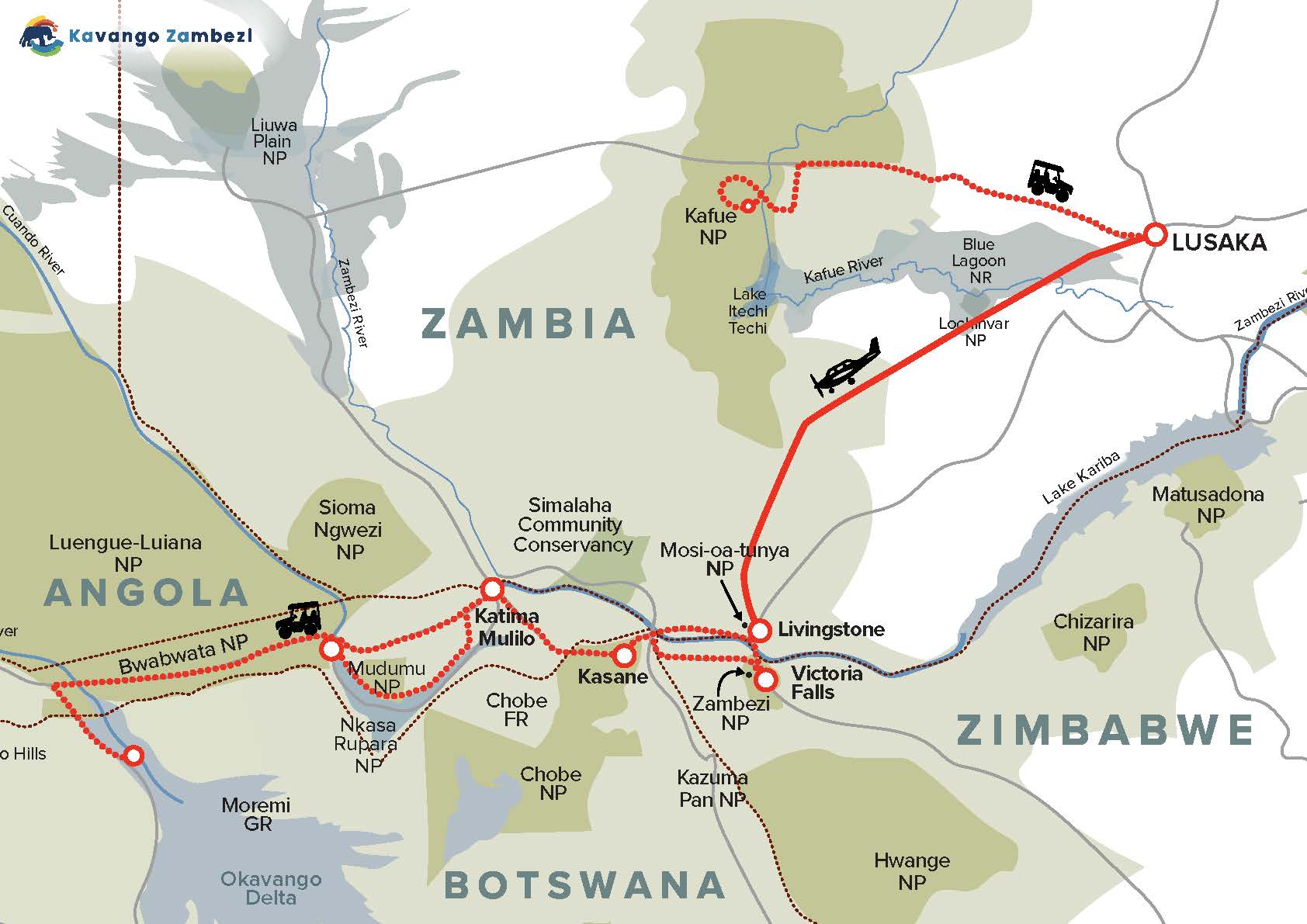
Birding across 4 Countries – 24 or more days
Fly into Lusaka
Road transfer or charter flight.
Northern Kafue, approx. 350km by road from Zambia’s capital City Lusaka. Some lodges are located on the banks of the Kafue River one of the longest rivers in Africa, and others on the Busanga Plains.
Where to stay: Kaingu Safari Lodge, Kasabushi Camp, Mukambi Safari Lodge, Fig Tree Bush Camp, Busanga Plains Camp, Mayukuyuku Camp, Busanga Kasonso, Kafue River Lodge, Lunga Kikuji
Alternatively try southern Kafue (fly in Ngoma or drive 350km from Lusaka and 370km from Livingstone) and stay on Lake Itezhi-Tezhi (Konkamoya Lodge)
Kafue National Park in Zambia is a premier birding destination, boasting over 500 bird species. Its diverse habitats, including wetlands, savannah, and woodlands, support a wide array of birds, from large raptors to vibrant sunbirds and bee-eaters. Rare and sought-after species like the African finfoot, Pel’s fishing owl, and Chaplin’s barbet (Zambia’s only endemic bird) can be found there.
Return to Lusaka by road and take a scheduled flight to Livingstone
Situated in Livingstone, on the Northern banks of the Zambezi River.
Where to stay: Waterberry Zambezi Lodge, Camp Nkwazi Tented Chalets, Thorn Tree Cottage, Maramba River Lodge, Jolly Boys Backpackers
Mosi-oa-Tunya National Park is a fantastic location for birdwatching, boasting over 400 different bird species. The park offers diverse habitats, including riverine forests, open plains, and wetlands, attracting a wide range of avian life. Birding enthusiasts can spot various species like African fish eagles, white-fronted bee-eaters, kingfishers, hornbills, and the rare Schalow’s turaco. The Zambezi River also provides excellent opportunities to observe waterbirds such as herons, storks, and cormorants.
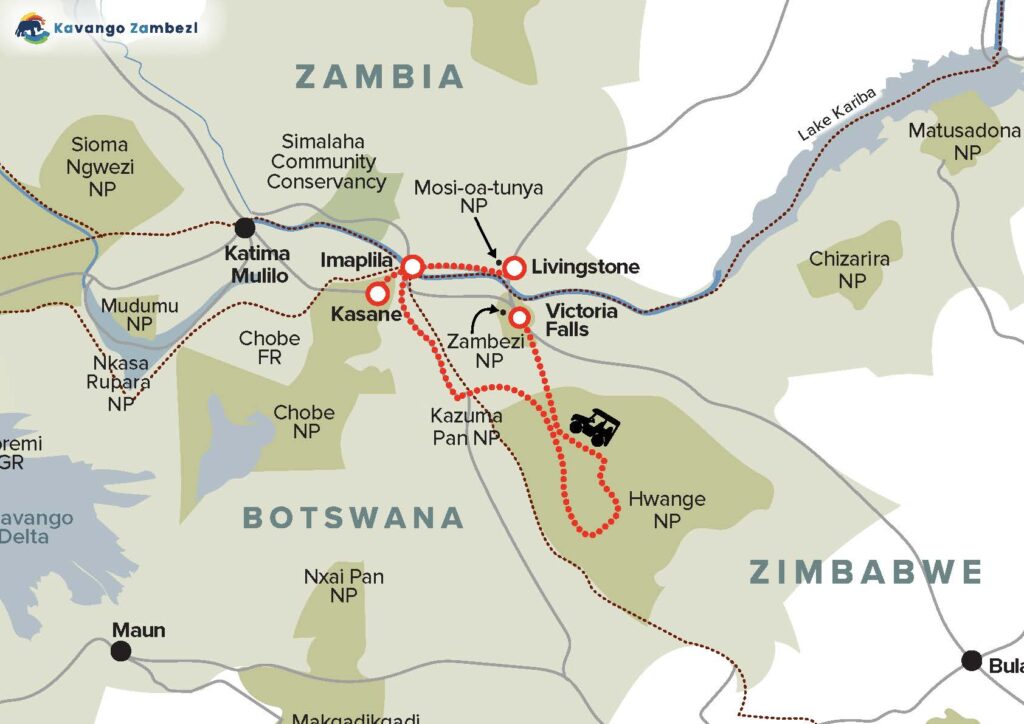
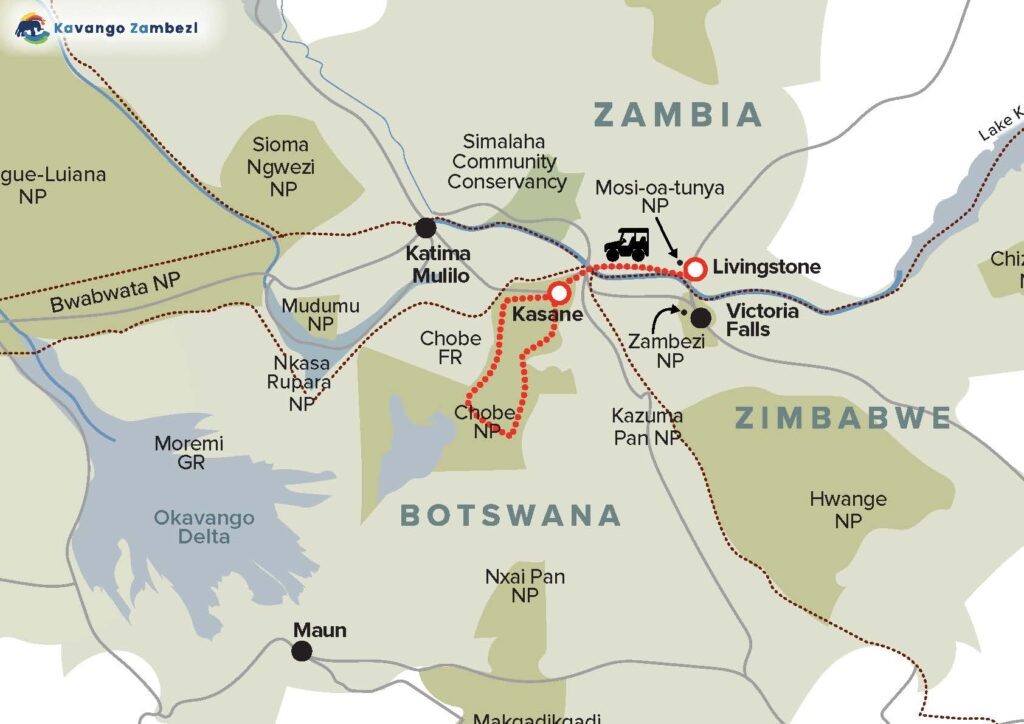
Transfer with Kalahari Tours and cross the Kazungula border into Botswana.
Where to stay: Camp Muchenje, Kasane Self-catering, Kubu Lodge, Ihaha campsite, Ngoma Safari Lodge, The Old House, Chobe Safari Lodge, Chobe Bush Lodge
Activities in Chobe include game drives into the National Park.
Chobe National Park in Botswana is a renowned birding destination, boasting over 450 bird species. The park’s diverse ecosystems, from the Chobe River and its floodplains to the dry savannas and woodlands, provide habitats for a wide array of both resident and migratory birds. November to April, especially January to March, is the best time for birding, as it coincides with the arrival of migratory birds and the breeding season. Boat cruises along the Chobe River and guided game drives offer excellent opportunities to observe the park’s birdlife.
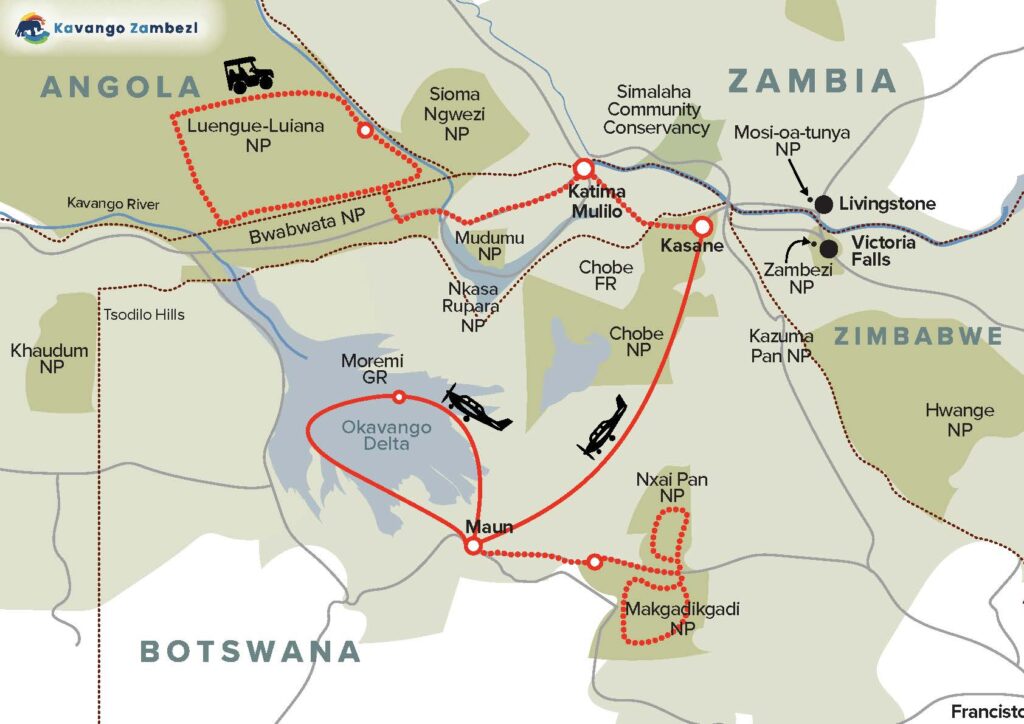
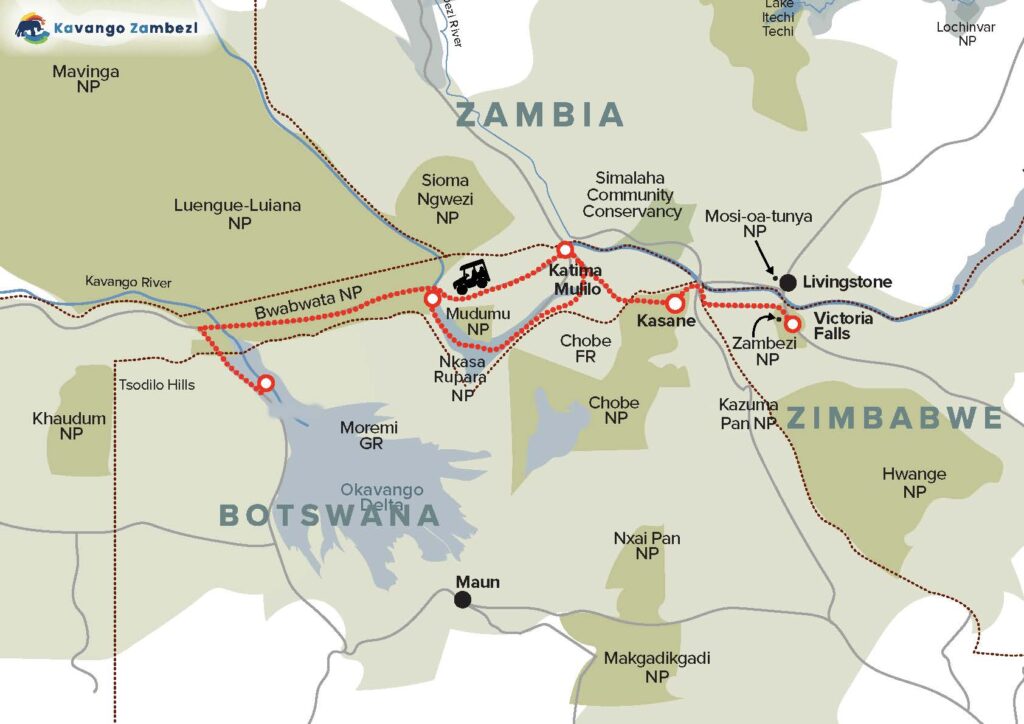
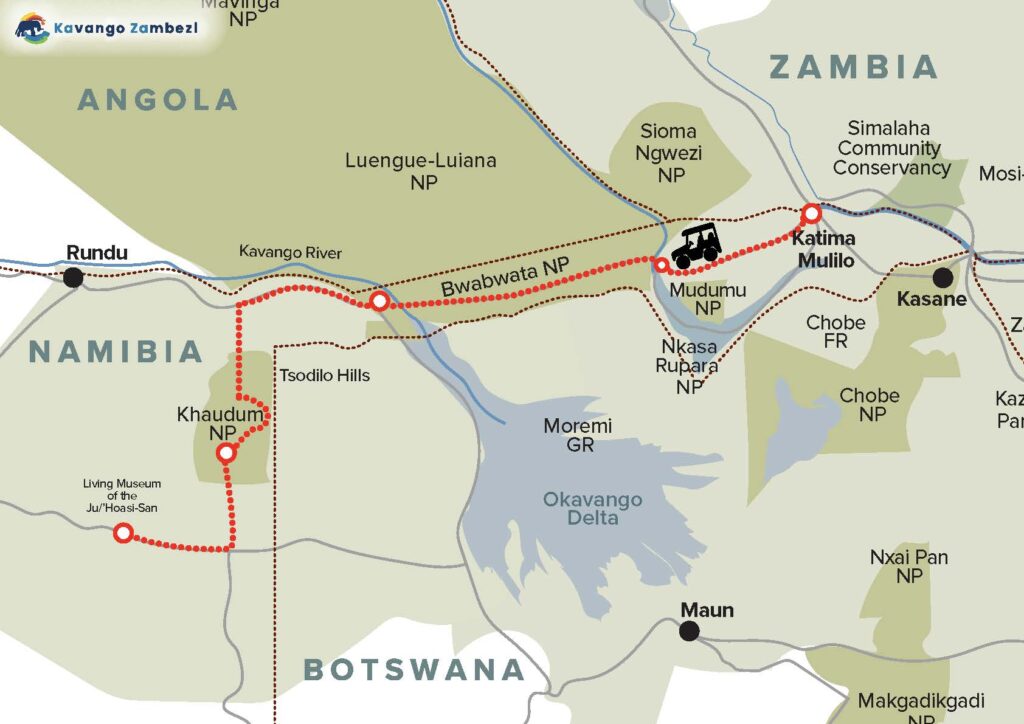
Cross the Ngoma border into Namibia and drive towards Katima Mulilo (This can be done as a self-drive or use Caprivi Adventures)
Where to stay: Caprivi Mutoya Lodge, Caprivi River Lodge or Caprivi Houseboat Safari Lodge
Join sunset boat cruise along the tranquil waters, where you’ll have the opportunity to witness the graceful African Fish Eagles soaring majestically overhead, their haunting calls echoing across the landscape. Keep your binoculars at the ready as you scan the skies for sightings of the African Hobby darting through the air and the elusive Bat Hawk stealthily gliding amidst the twilight.
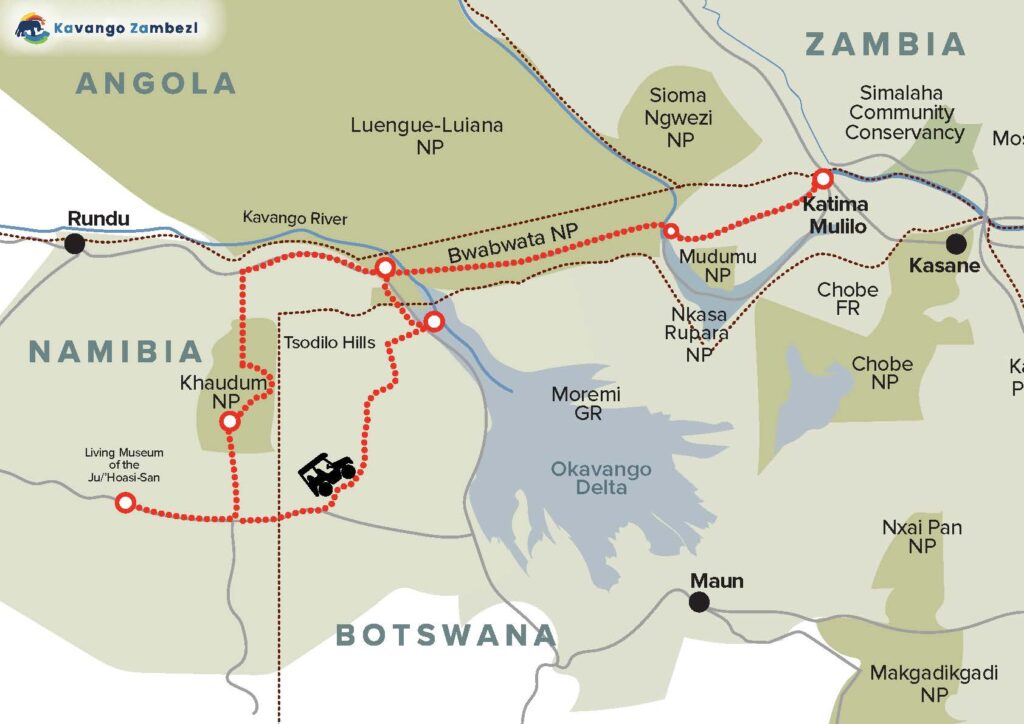
Drive west towards Kongola and then continue west to Divundu and then cross the Mohembo border into Botswana. This will be your longest drive (approx. 4 hours to the border)
Where to stay: Xaro Lodge, a locally owned lodge situated on the Okavango Panhandle, or Askiesbos, owned by a local family, who are passionate about the area.
Whether by boat or by foot, there are plenty of opportunities for birding on the Panhandle.
From the most experienced birders to amateur enthusiasts, there is no shortage of activities to keep you occupied. With our expert guides and the perfect habitat for many rare species, you will be sure to find what you’re looking for, even if you don’t know what that is yet!
It is arguably one of the best places to see Pel’s Fishing Owls.
Visit Tsodilo Hills and see some of the more than 4000 rock paintings scattered across four hills. Hike, climb, crawl…or simply take a walk.
Cross back into Namibia at the Mohembo border to Divundu.
Where to stay: Shamvura Camp, Camp Nkwazi, Mahangu Safari Lodge, Ndhovu Safari Lodge, Nunda River Lodge, Ngepi Camp, Namibia Wildlife Resorts – Popa Falls
Popa Falls National Park is a great location for birding, particularly during the wet summer months (December to February) when there’s an abundance of insects and migratory birds. The park is known for its diverse birdlife, including wetland species and raptors, with highlights like the Slaty Egret, Wattled Crane, and Black-winged Pratincole.
If you visit in October/ November you can watch the Carmine Bee-Eaters nesting on the banks of the Kavango River.
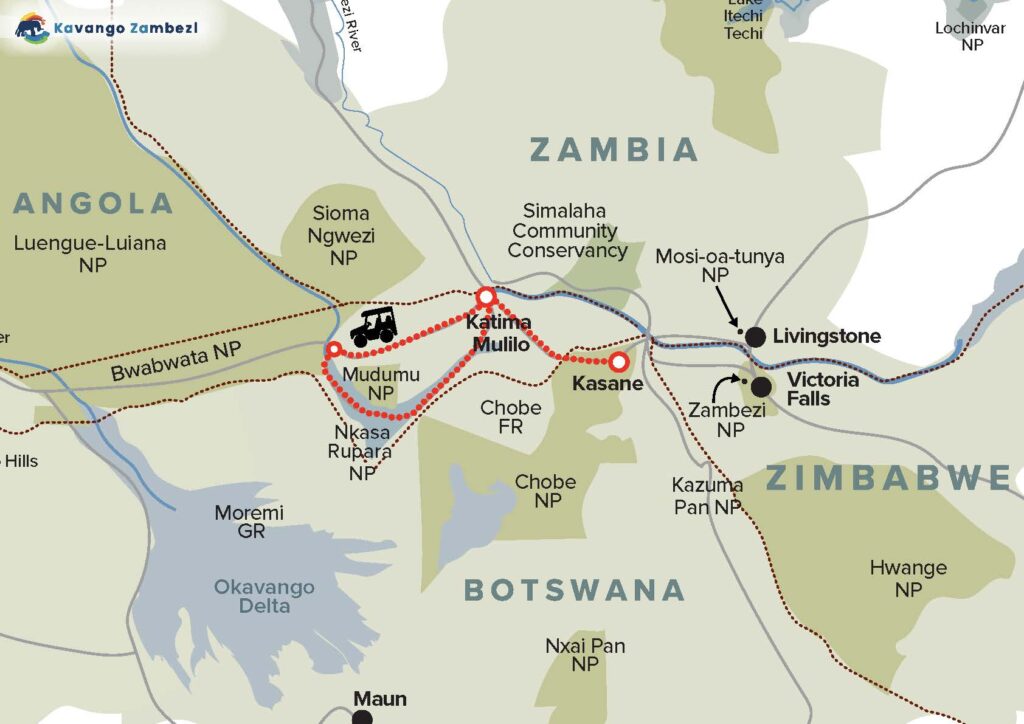
Drive east to Kongola and then south on the C49 to Nkasa Rupara National Park
Where to stay: Nkasa Lupala Tented Lodge or Jackalberry Lodge, a joint venture between the private sector and the Wuparo Conservancy. Situated on the banks of one of the many channels of the Kwando-Linyanti river system, a unique Namibian wetland paradise in the Zambezi Region. Or alternatively camping at Rupara Community Rest camp
Nkasa Rupara National Park offers excellent birding opportunities, particularly during the wet season (November to April) when summer migrants arrive. While the wet season provides the best birding, much of the park becomes inaccessible due to flooding. The dry season (May to October) is more suitable for general wildlife viewing and offers easier access to the park’s islands, Nkasa and Lupala.
Drive to Kasane
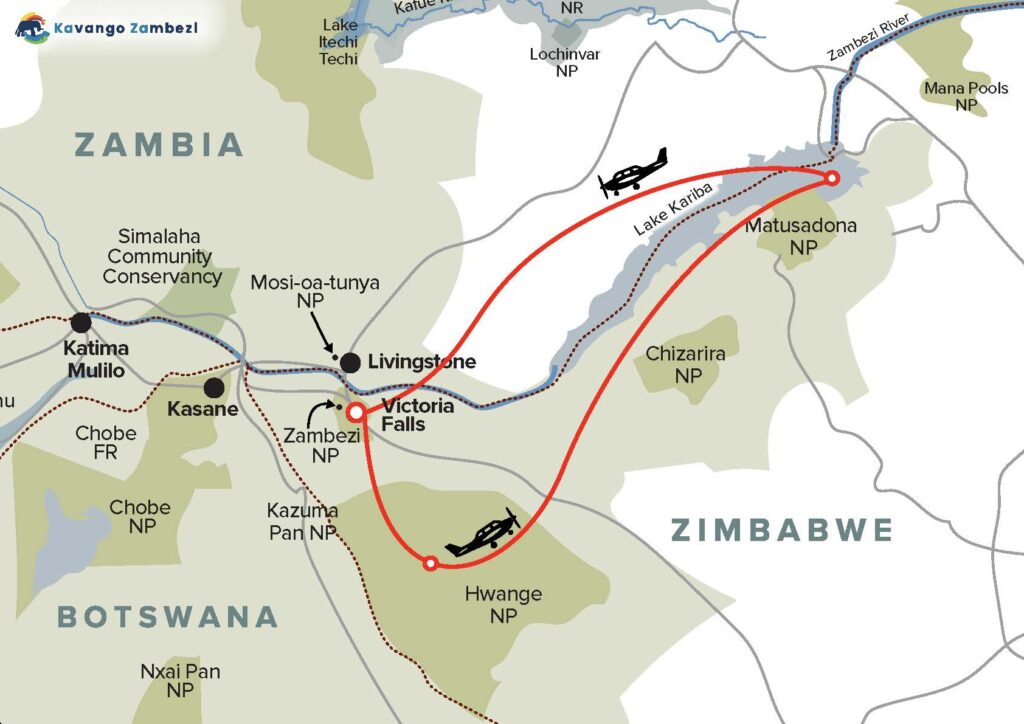
Cross the Kazungula border into Zimbabwe and drive to Victoria Falls
Plenty to see and do around the Falls, not just the magnificent Falls themselves.
Victoria Falls National Park is a haven for birdlife, boasting over 400 different species. The park’s diverse habitats, from the Zambezi River to the rainforest and woodlands, support a wide array of birds. Some notable species include the African Fish Eagle, the African Finfoot, Schalow’s Turaco, and various hornbills.
Where to stay: Camping – Chamabonda Sleep-out Platforms, Chundu 1 & 2, Victoria Falls Rest Camp
Lodges – Victoria Falls Safari Lodge, Elephant Camp, The Wallow, Old Drift Lodge, Shearwater Village or Bayete Guest Lodge
Fly out of Victoria Falls