Angola
  Botswana
  Namibia
  Zambia
  Zimbabwe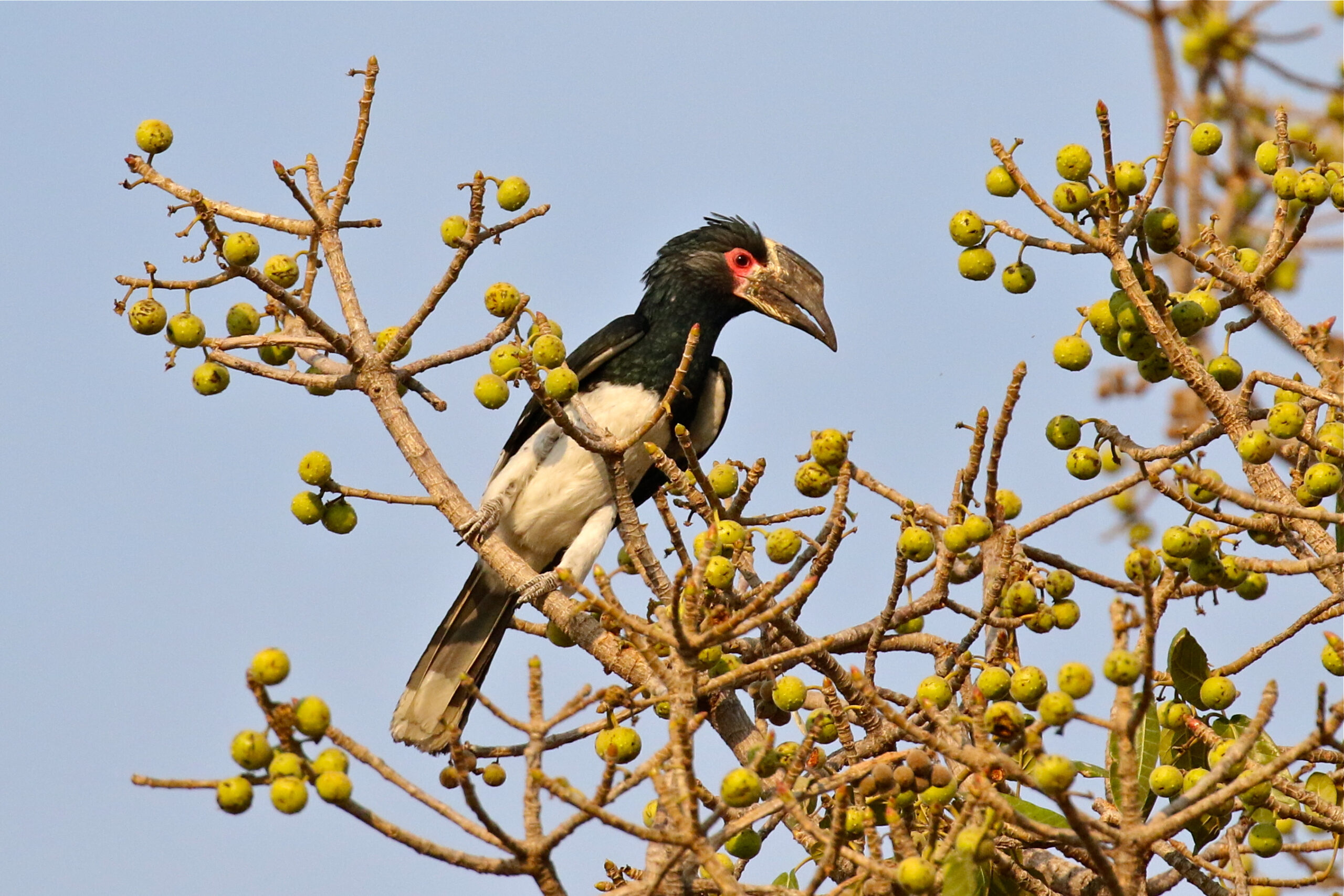
Zambia: Simungoma-Machile-Livingstone
The southwest corner of Zambia holds with three separate Important Bird Areas (IBAs), all shaped by the Zambezi River and its tributaries. At the eastern edge of this region is Mosi-oa-Tunya National Park, which protects the world-famous Victoria Falls and the rugged Bakota Gorge. Upstream of the falls, on the Zambezi floodplain, are the extensive wetlands and woodlands of the little-known Simungoma and Machile regions, recognised by BirdLife International as the Southern Zambia Endemic Birding Area.
Mosi-oa-Tunya National Park may be Zambia’s smallest national park but, with the pull of Victoria Falls, is one of the most popular. Its rich tapestry of habitats supports at least 350 species of bird. Close to the falls themselves, a lush ‘rainforest’ created by the permanent spray is home to noisy Trumpeter Hornbills and showy Schalow’s Turacos, while Collared Palm Thrushes sing from the understorey. Below the falls, the dramatic cliffs of the Batoka Gorge provide breeding sites for cliff-loving raptors, including Verreaux’s Eagle,Augur buzzard and, sometimes, the much sought after Taita Falcon. Look out also for Mocking Cliff-chatsand Black Storks, the latter sometimes seen soaring above.
Upstream of the falls, still within the park, the river’s broad expanse is a haven for waterbirds, including Goliath Heron, Long-toed Lapwing and African Fish Eagle. From August to December, you might spy African Skimmers plying the surface and Rock Pratincoles perched on exposed rock outcrops. Quieter stretches also hold such elusive species as Half-collared Kingfisher and African Finfoot – the latter typically seen swimming near the bank beneath overhanging vegetation. Away from the river, a patchwork of woodland habitats supports numerous local specials, including Bradfield’s Hornbill, Livingstone’s Flycatcher and the exquisite little Red-throated Twinspot.
Livingstone lies just outside the park and is a hub for visitors to Victoria Falls. At Dambwa Lagoons (aka Livingstone Lagoons), a water treatment centre south of town, you’ll find plentiful wildfowl and water birds, from white-faced whistling duck and Purple Swamphen to Dwarf Bittern and African Painted Snipe. Migrant waders such as Wood Sandpiper and Ruff forage at the margins, with rarities such as broad-billed sandpiper sometimes recorded.
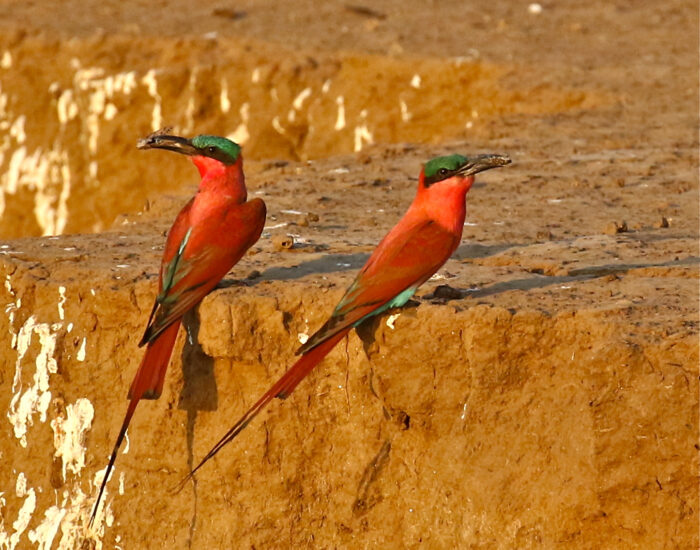
West of Livingstone, about 75km upstream, lies Katombora Rapids – another local tourist attraction. Here, you can find Rock Pratincoles and Southern Carmine Bee-eaters among a wealth of riverine species, and islands such as Nampene hold localised specials such as Spotted Creeper, Southern Brown-throated Weaver and Swamp Boubou. Guides at the lodges will often know a good site for Pel’s Fishing Owl, best observed after dark when it descends from its hidden daytime roost to hunt from perches above the water.
Continuing westwards upstream, you reach the Simungoma IBA, which straddles the Livingstone to Sesheke road. Here the sandy floodplain is punctuated with oxbows, swamps and small elevated islands of trees, grading to denser woodland away from the river. This region teems with waterbirds, especially at the end of the rains when the flood waters recede, leaving pools that attract the likes of Open-billed Storks, Black Heronsand the regional endemic Slaty Egret. African Marsh Harriers quarter the reedbeds, Southern Carmine Bee-eaters nest in sand banks along the river, and huge flocks of Black-winged Pratincoles mass over the floodplain during their annual migration.
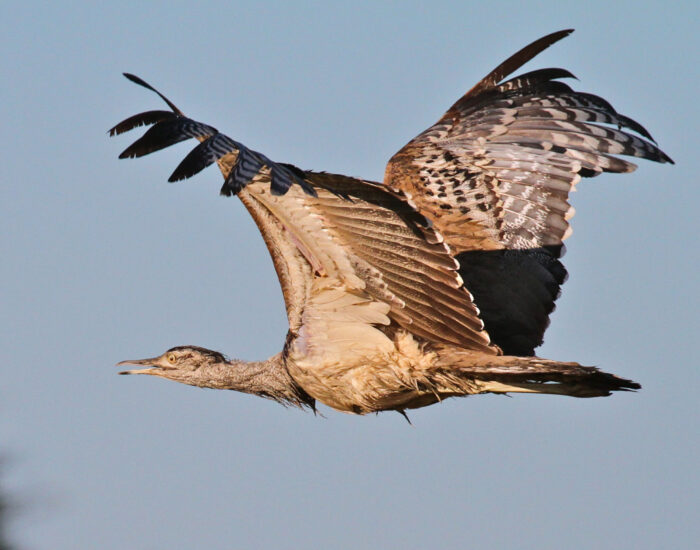
At the edge of the floodplain plain you’ll find the localised Burchell’s Starling and Cape Glossy Starling, while notable species of the acacia woodlands include Acacia Pied Barbet, Marico Flycatcher and Shaft-tailed Whydah. This is one of the few locations in Zambia where the enormous Kori Bustard has been recorded, occurring alongside its smaller cousins, the Red-crested Korhaan in open woodland and Black-bellied Bustard on the grassland.
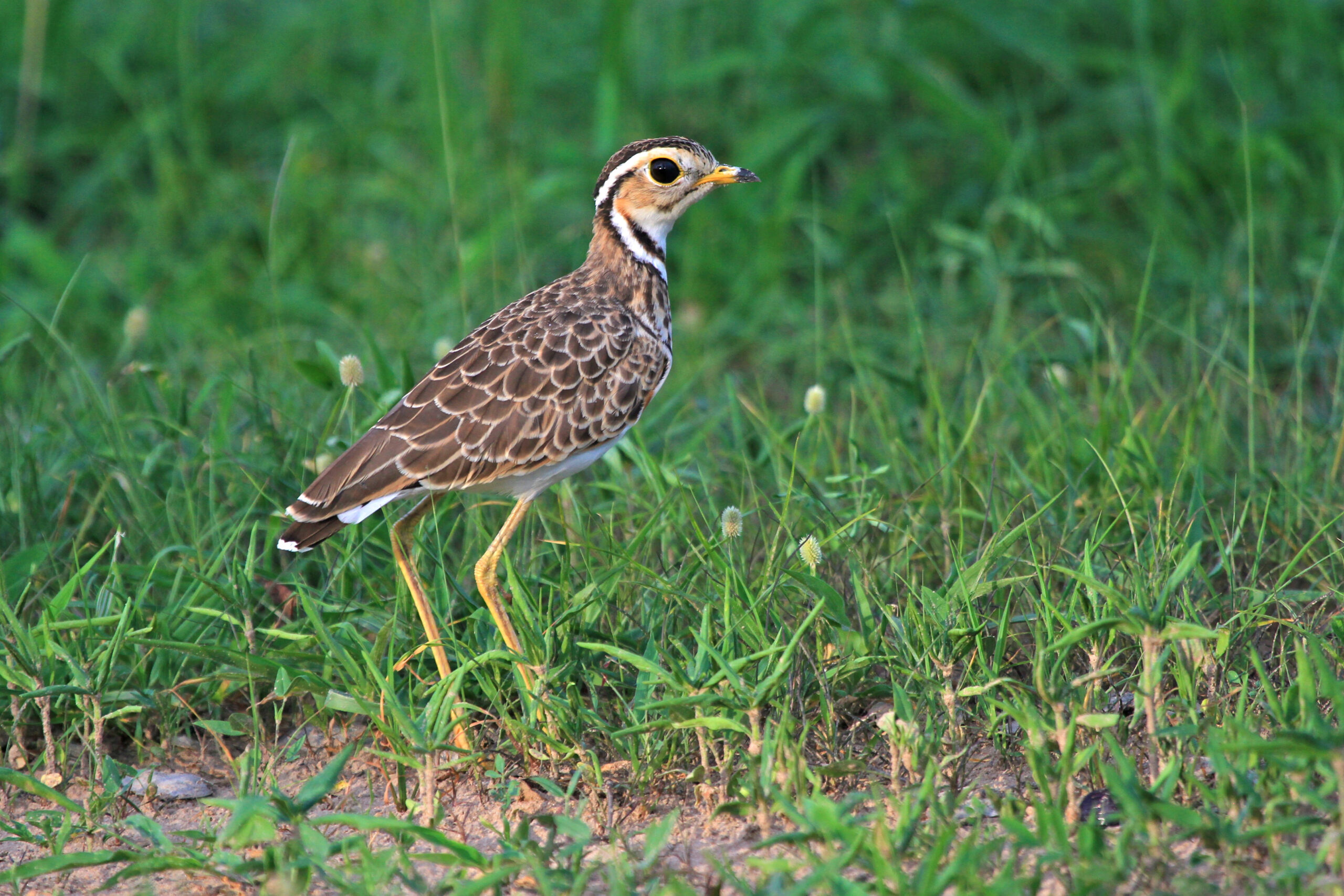
Machile IBA is set back further from the river to the northeast of Simungoma. This area is the stronghold of the Black-cheeked Lovebird, Africa’s most localised parrot, and supports about two thirds of the known population. The area is dominated by mopane woodland, with some grassland, thicket and Mutemwa forest. Other notable species found here include Heuglin’s Courser, Raquet-tailed Roller and Black-faced Waxbill. The floodplain attracts gatherings of Wattled Crane and Pink-backed Pelican, while an impressive suite of raptors includes Dickinson’s Kestrel and, if you’re lucky, the elusive Bat Hawk.
Victoria Falls is an international tourist hub, with plentiful accommodation and activities in Livingstone and along the Zambezi. Boat cruises on the river and game drives in Mosi-oa-Tunya National Park offer great birding, and dedicated tours are available. Further west, Simungoma and Machile lie much more off the beaten track, but lodges and fishing camps along the river make good bases, with some organising birding tours and other activities.
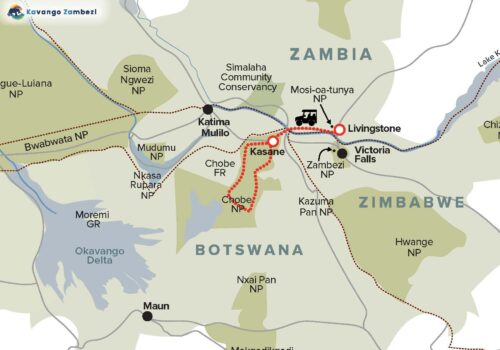
Zambia / Botswana – 4 nights or more
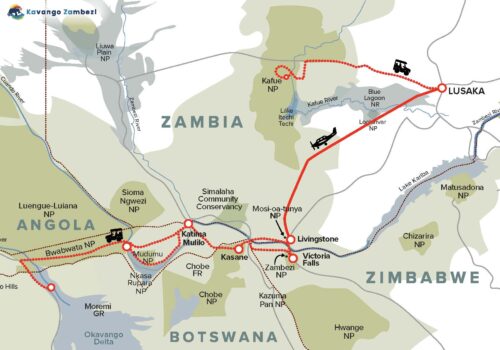
Zambia Horse-riding, Birding & Wildlife Itinerary